Affiliate disclosure: we earn a commission from qualifying Amazon purchases made through our links. It costs you nothing extra and doesn't change how we rank anything.

Best Vegetable Chopper 2026: Manual vs Electric, Tested and Ranked

Does a vegetable chopper actually work, or is it one more TikTok viral kitchen gadget headed for the back of the drawer? A good one works. It won't replace your knife for everything, but for onions, peppers, garlic and the rest of weeknight meal prep, it turns a slow, teary job into a few presses. The trick is matching the type, manual or electric, to the way you cook. That's what this guide sorts out.

Vegetable Chopper Quick Picks at a Glance

Short on time? These are the 3 best picks across both types, each for a different kind of cook.

Top 3 Best Overall Vegetable Choppers

  1. No. 1Best overall manual

    Fullstar Pro Original

    Best overall manual: Fullstar Pro Original. A multi-insert push model with a big catch container. Dicing, slicing and spirals from one kitchen tool.

    Check price
  2. No. 2Best electric

    Cuisinart Elemental Chopper/Grinder

    Best electric: Cuisinart Elemental Chopper/Grinder. Handles hard roots, nuts and sauces that would wreck a plastic blade frame. Pick it if you prep in volume.

    Check price
  3. No. 3Best for tiny kitchens

    Ninja Food Chopper Express Chop

    Best for tiny kitchens: Ninja Food Chopper Express Chop. Small footprint, one-touch pulsing, quick to rinse. Ideal for two-person households.

    Check price
Check price

Amazon prices move week to week. The button shows today's number, not last month's.

Vegetable Chopper Performance: What Our Testing Found

Veggie choppers are all over TikTok, and the doubt is fair. Plenty of people still remember the Slap Chop and Vince Offer promising to fix dinner one slap at a time. So here's the straight answer before any recommendation: yes, they work, within limits. A sharp, well-built model is perfect for chopping onions without tears, cubing peppers for fajitas and mincing garlic without sticky fingers. Worth it? If you cook at home most nights, almost always.

Chopping, Dicing, and Slicing Speed Compared

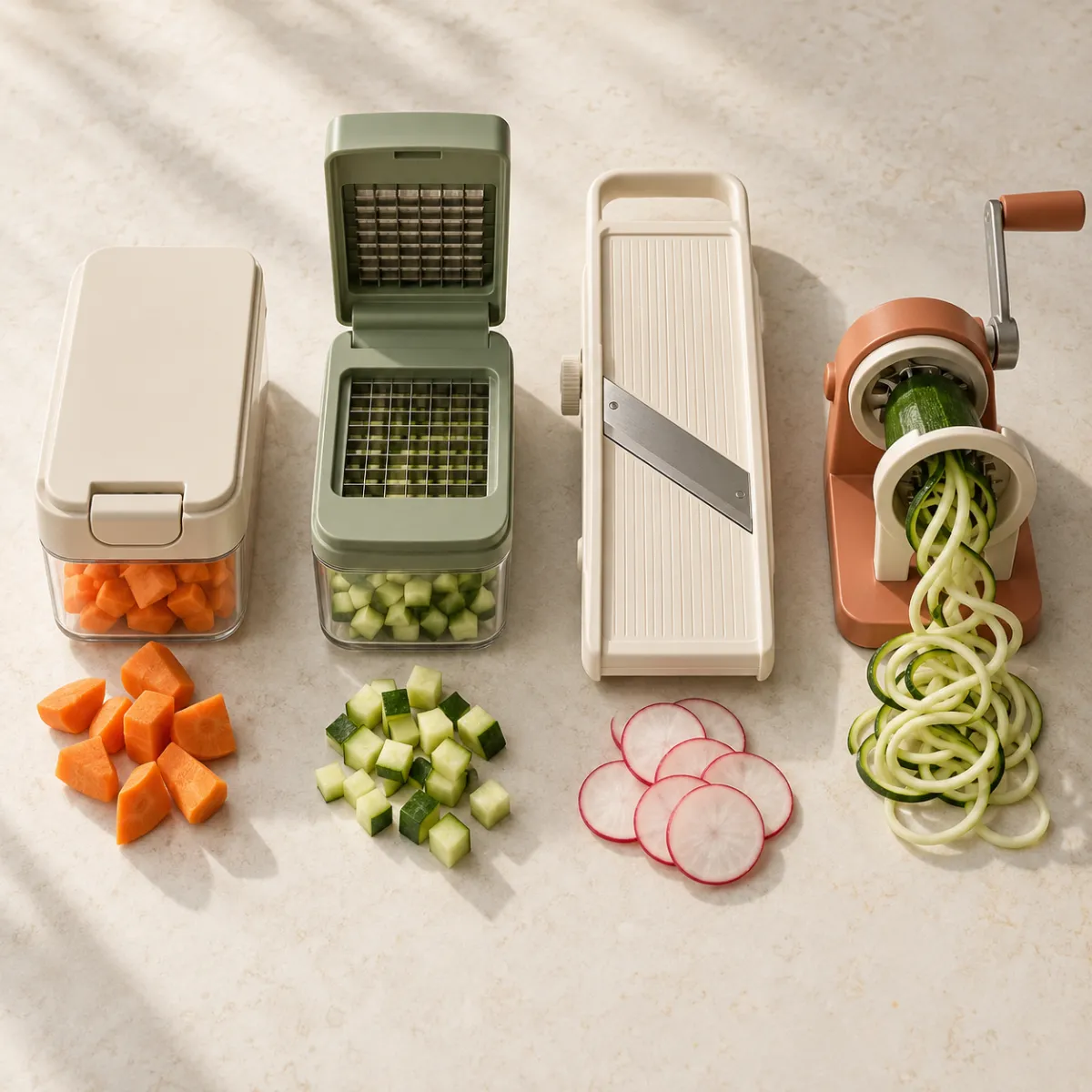
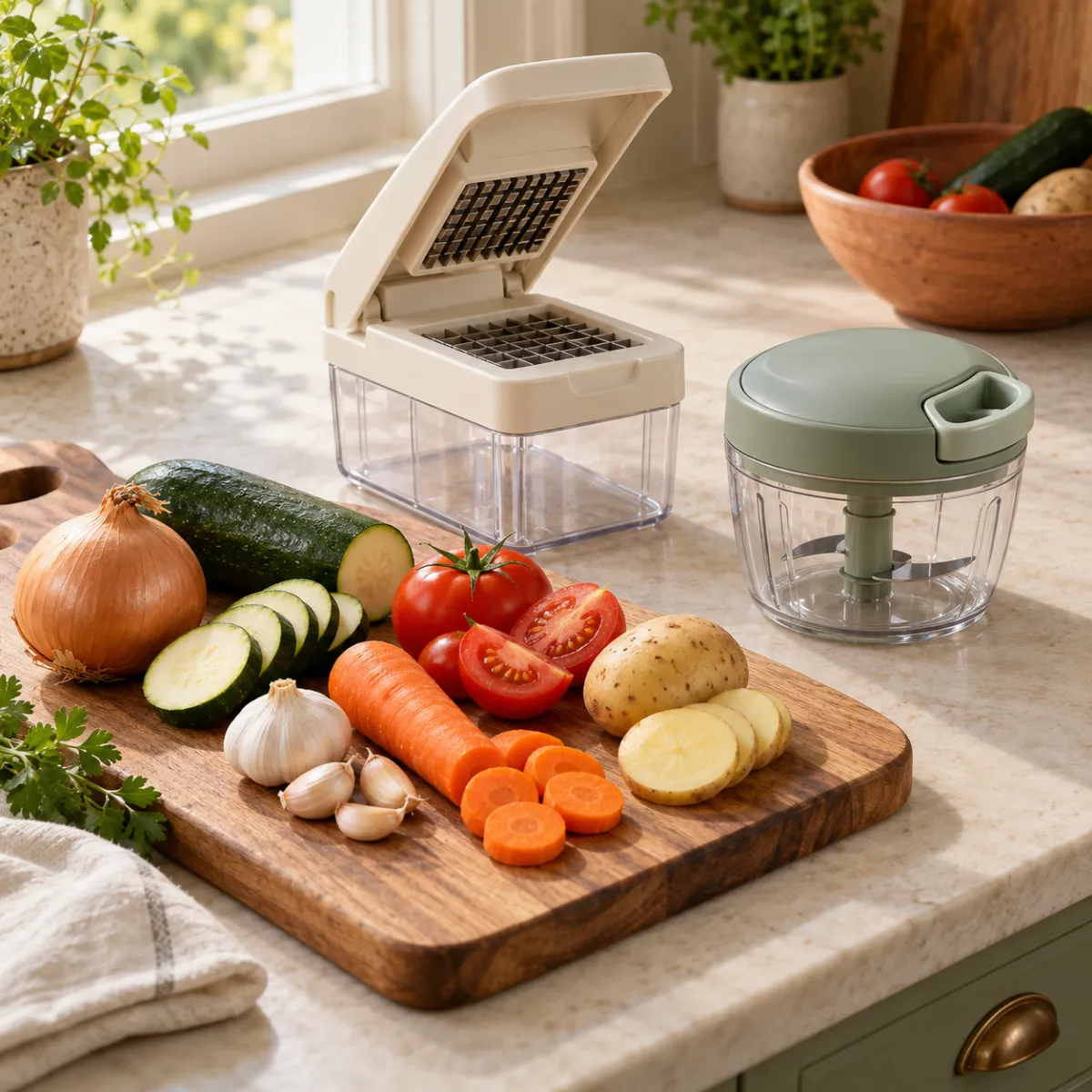
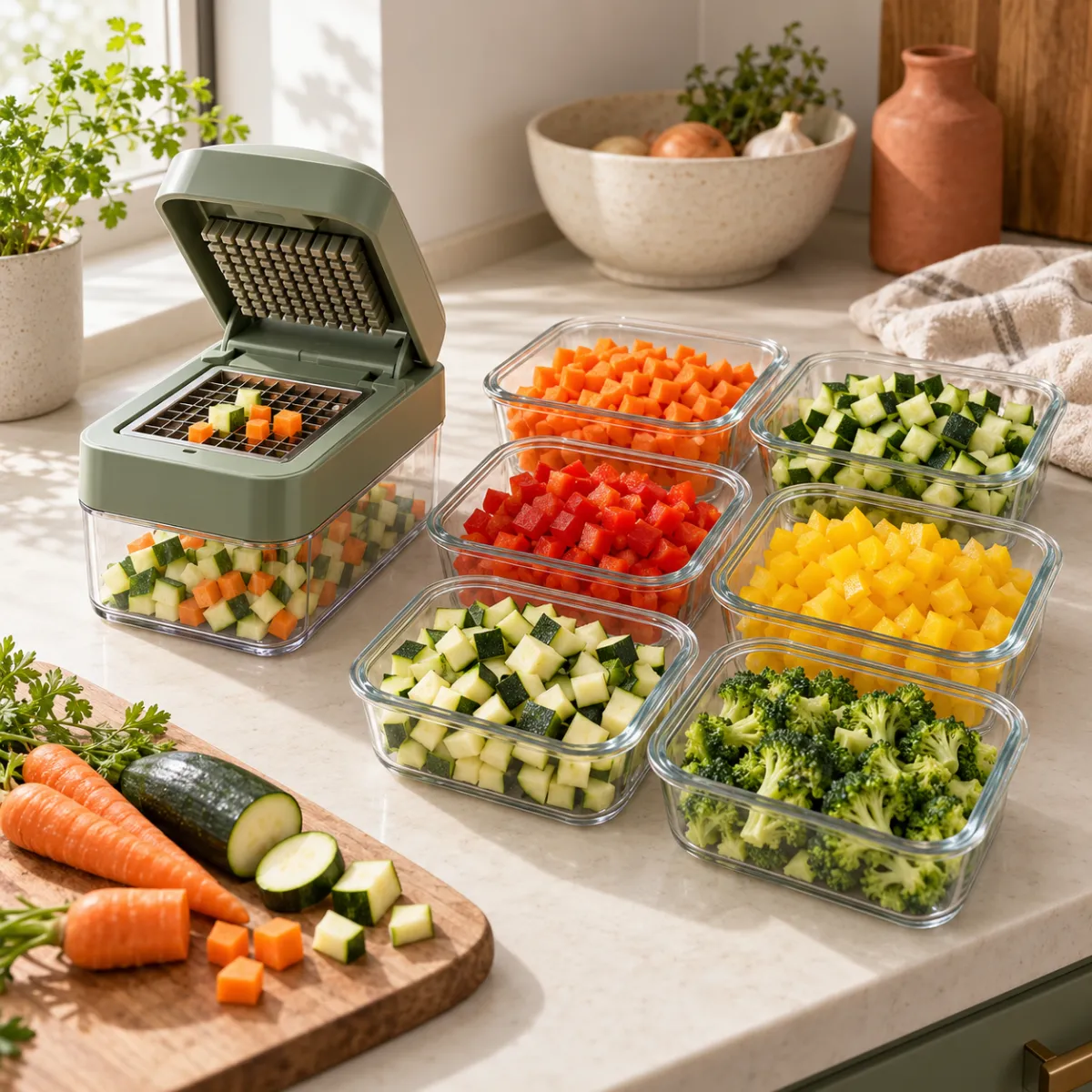
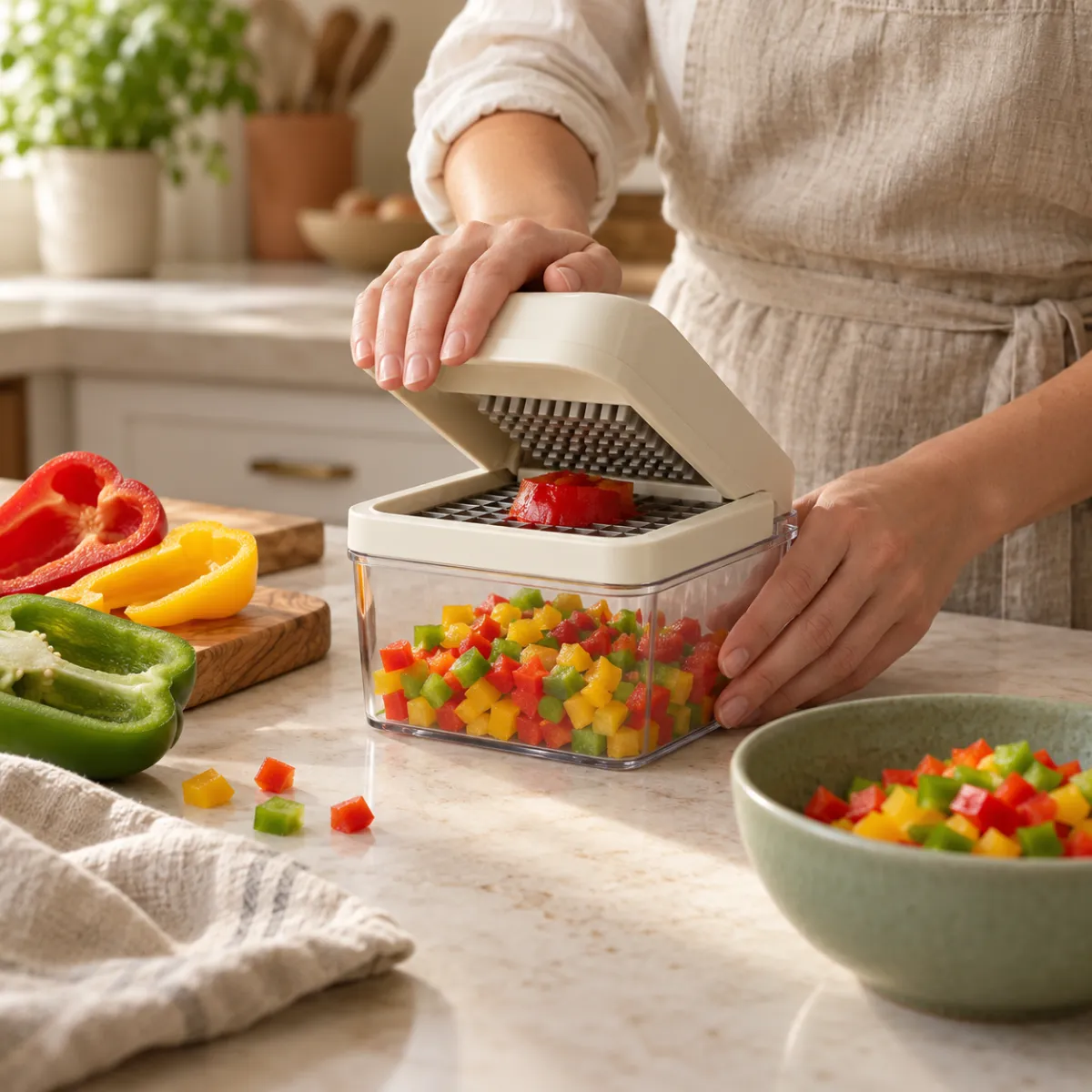
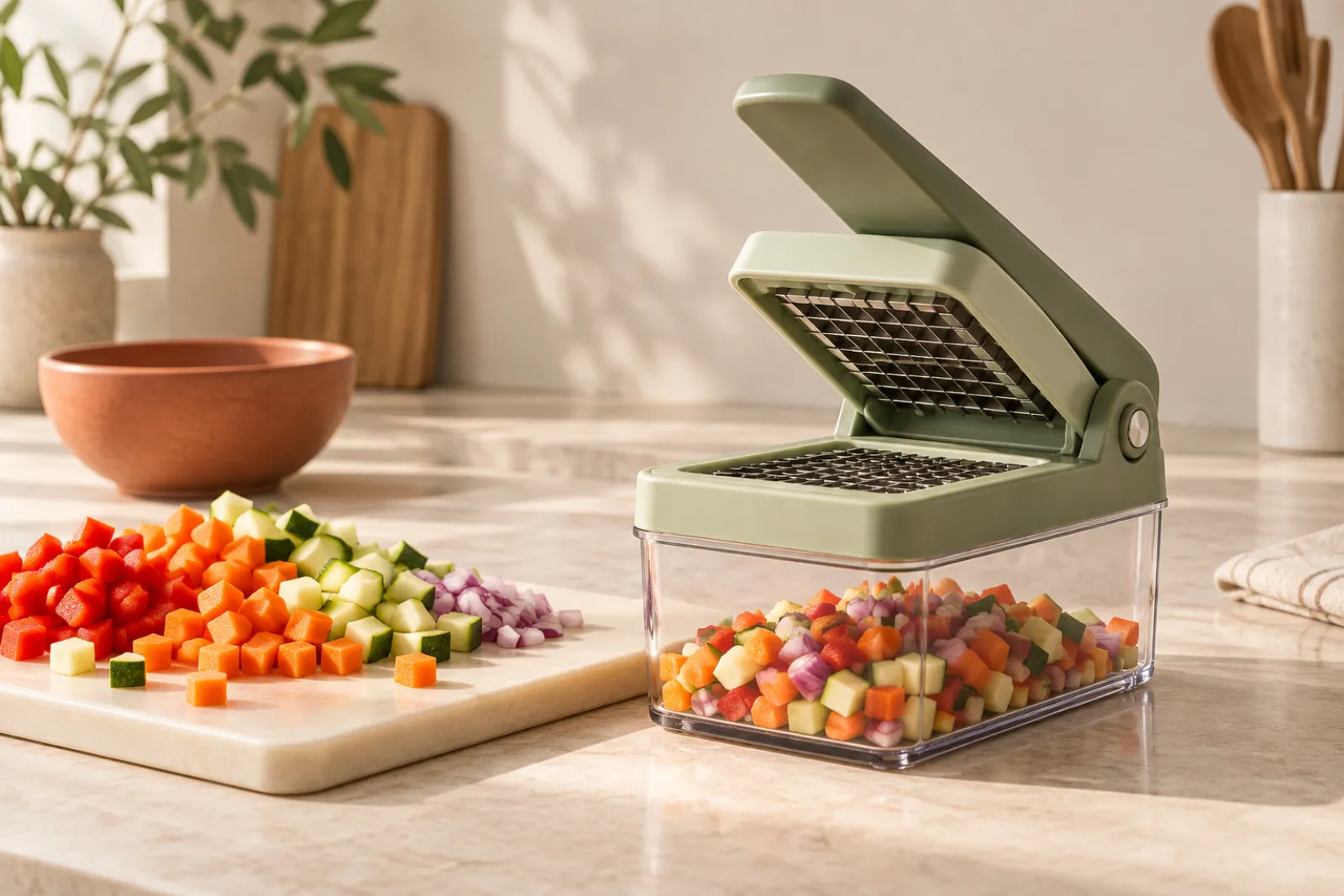
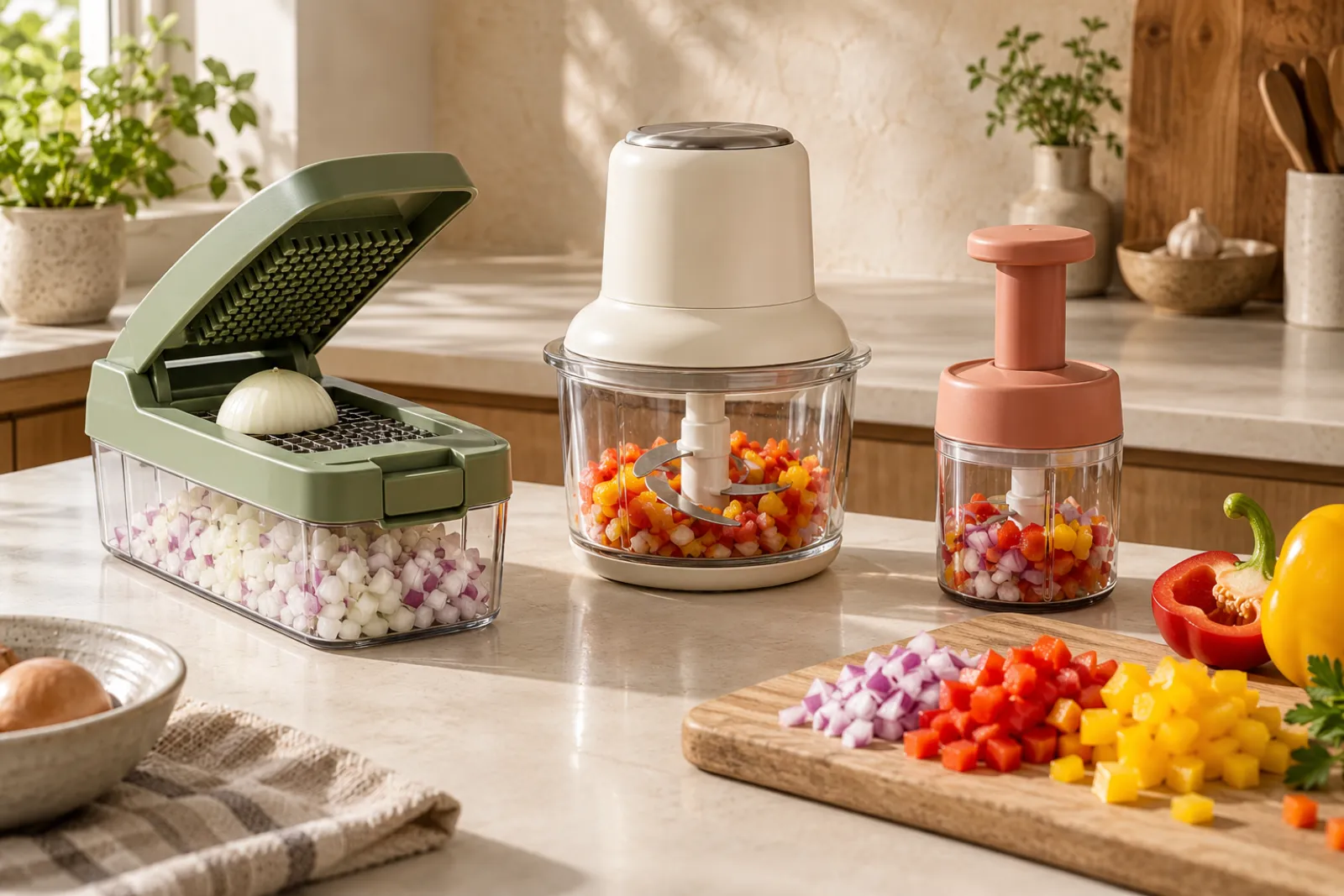
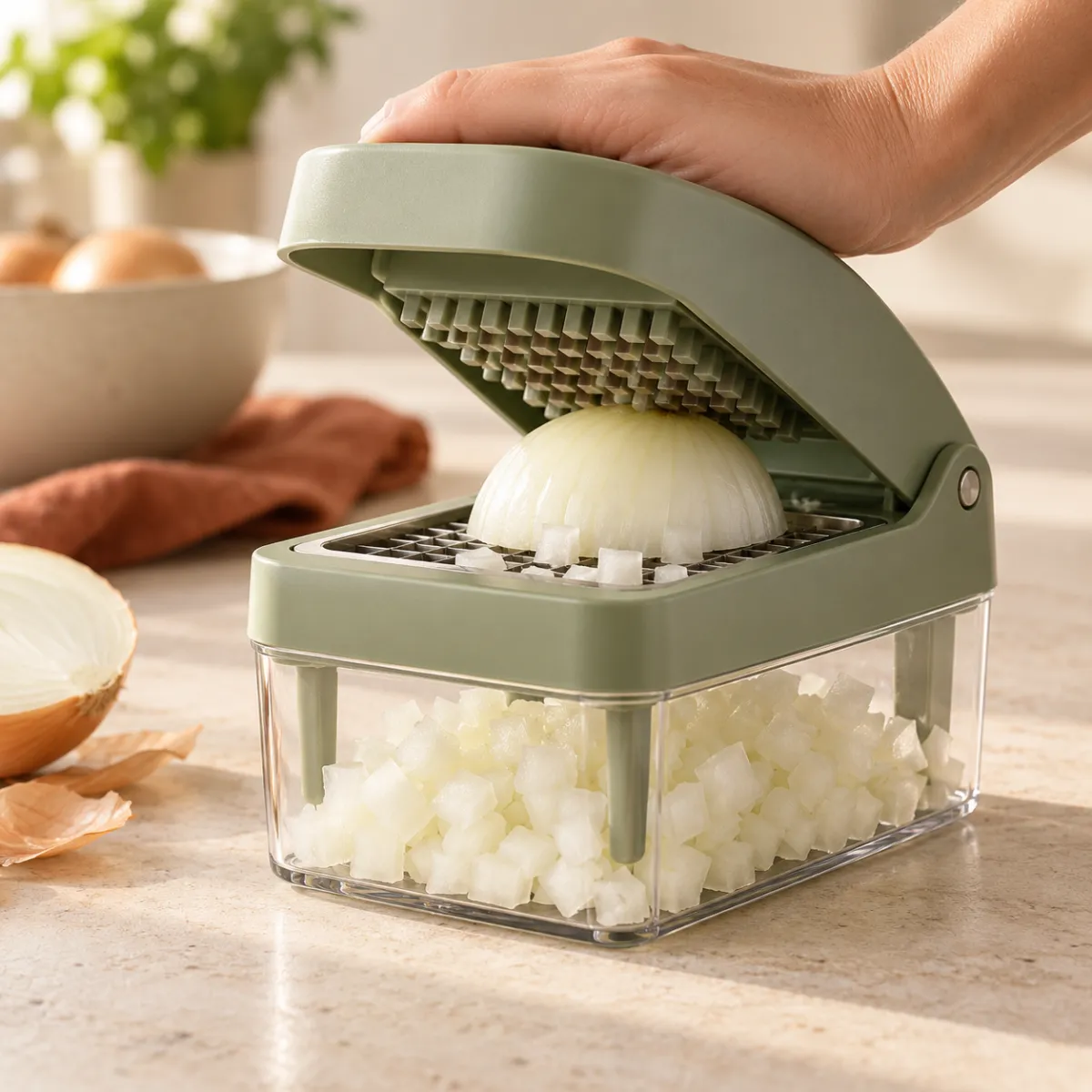
  • Press-style models are the fastest route to uniform cubes. Lay a halved onion on the blades, push the lid, and a full layer drops into the container in one stroke. Cucumber, bell pepper and celery go just as smoothly.
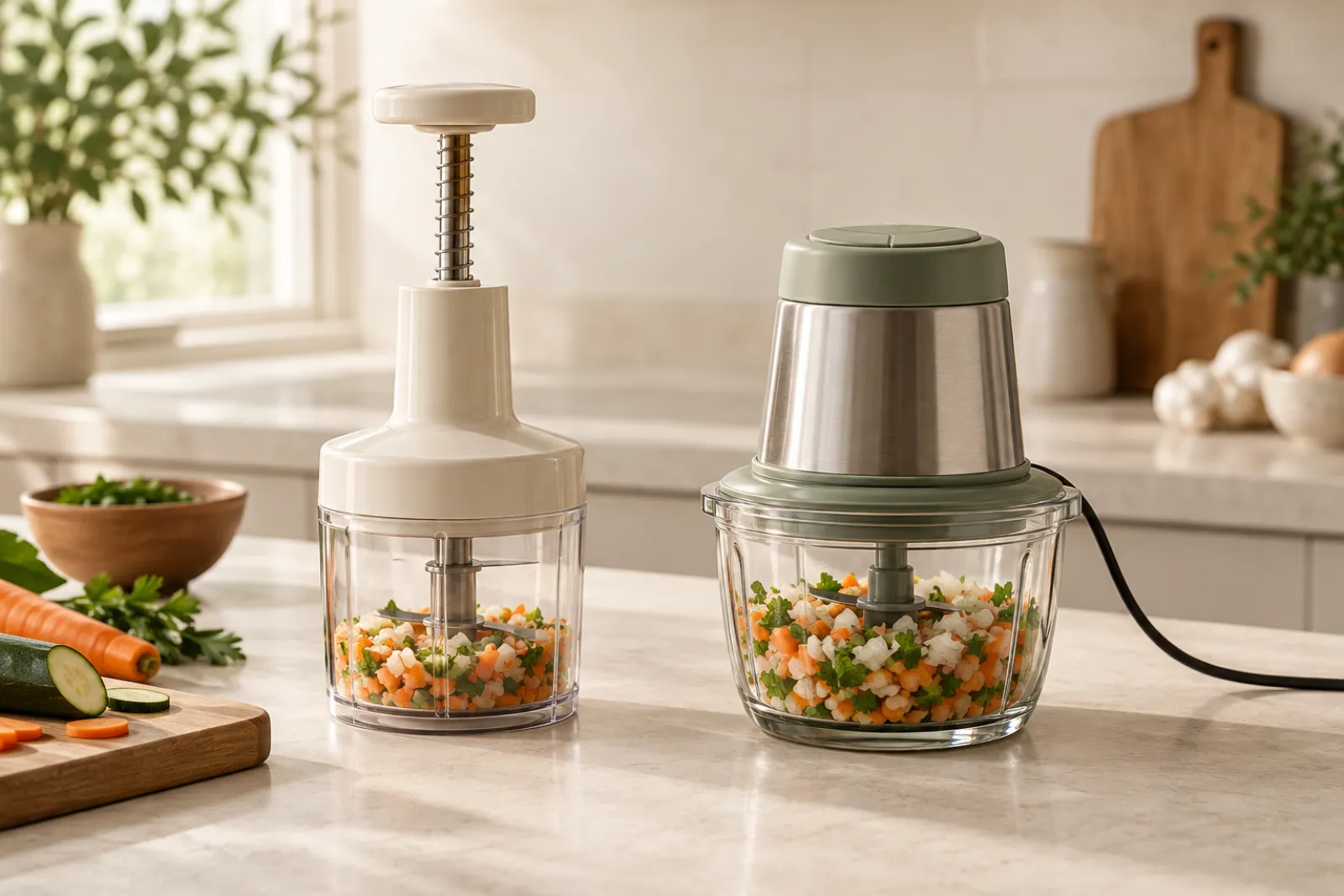
  • Pull-string models spin blades inside a closed bowl. A few pulls give a rough chop for salsa; keep pulling and you get a fine mince. You control texture, but no two pieces match.
  • Electric minis win on volume. Pulse in short bursts, though. Hold the button and your onion becomes soup.

For slicing, the flat insert on a press-style kit does a decent job. It just can't match a dedicated blade for paper-thin rounds.

Common Complaints and When a Chopper Falls Short

Most bad reviews come down to four issues:

  • Hard produce. Raw carrot, sweet potato and butternut squash fight plastic. Force it and hinges crack.
  • Soft produce. Very ripe tomatoes squash into pulp and juice.
  • Clogging. Bits wedge between blades, so washing takes a minute longer than you'd guess.
  • Small bowls. Compact models mean working in rounds.

Know those limits going in and you'll be happy. The picks below were chosen with exactly these weak spots in mind.

Manual vs Electric Vegetable Chopper: Which Type Fits Your Kitchen

The real decision isn't brand. It's muscle or motor. A push chopper or pull-cord bowl is quiet, cheap to own and goes anywhere, from a camper to a dorm. Corded and battery powered models do the work for you but take counter space and need a socket or a charge.

FactorManualElectric
EffortYou press or pullMotor does it
NoiseNear silentLoud for a few seconds
Cut styleUniform cubes (press) or coarse-to-fine (pull)Coarse to smooth
Hard produceStrugglesHandles it
WashingEverything goes in the sinkBase must stay dry
Price tierBudget to mid-rangeMid-range

Manual Chopper Pros and Cons

A manual chopper wins on simplicity. Nothing to plug in, nothing to burn out.

  • Pros: precise, repeatable cubes; silent; every part rinses; stores in a cupboard.
  • Cons: hard roots are tough going; press-style models need prepped slabs; arm effort adds up on big batches.
Electric Chopper Pros and Cons

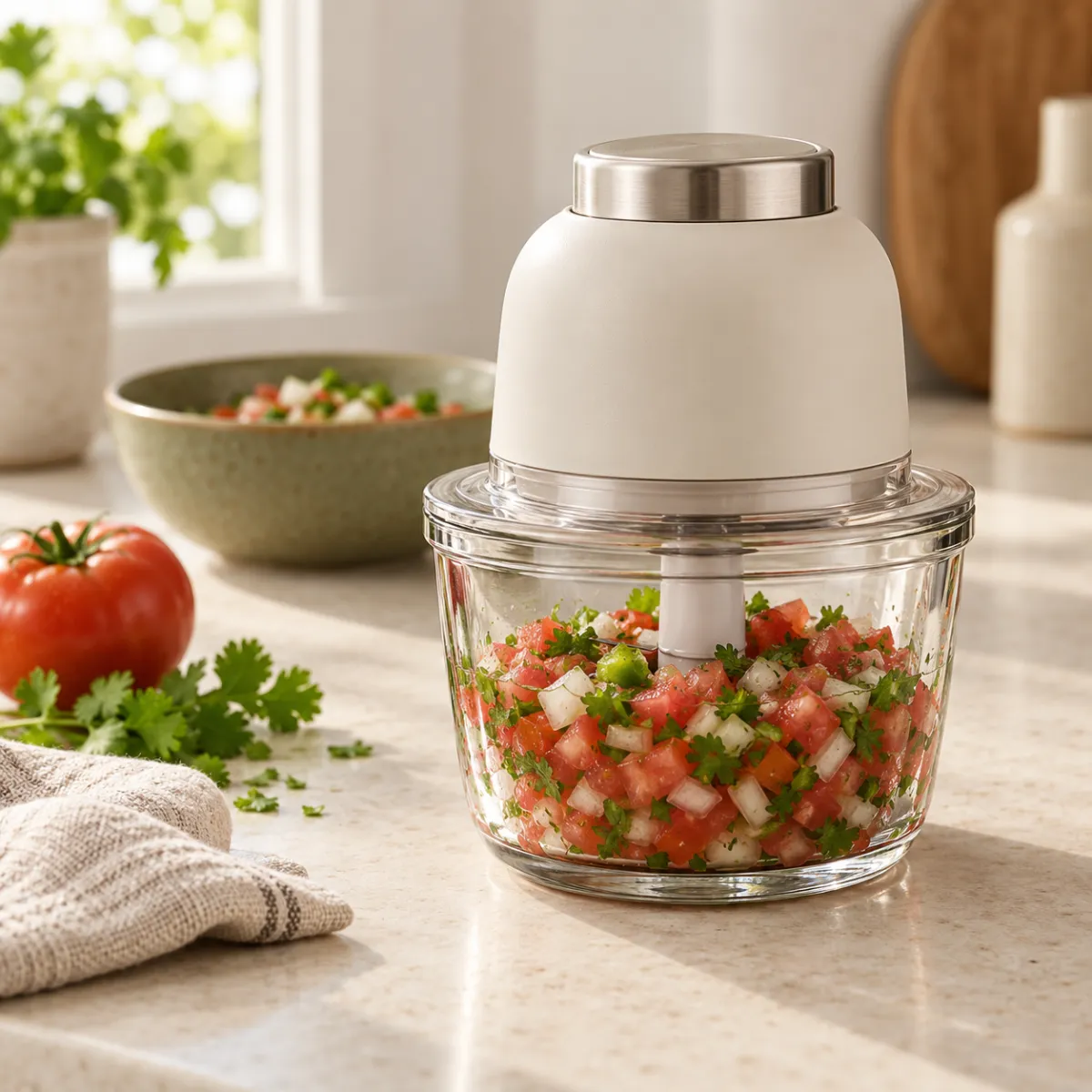
An electric chopper is the better buy if you make sauces, dips or pesto, or if hand strength is an issue.

  • Pros: fast with volume; grinds nuts and breadcrumbs; zero arm effort.
  • Cons: less uniform pieces; louder; the motor base can never be submerged.

Still torn? If you mostly dice onions and peppers, go manual. If your recipes say "blitz," go electric.

Best Manual Vegetable Chopper Picks, Ranked

All three need no outlet and went through the same routine. The pros and cons are blunt on purpose.

No. 1Best overall manual

Fullstar Vegetable Chopper: Pros and Cons

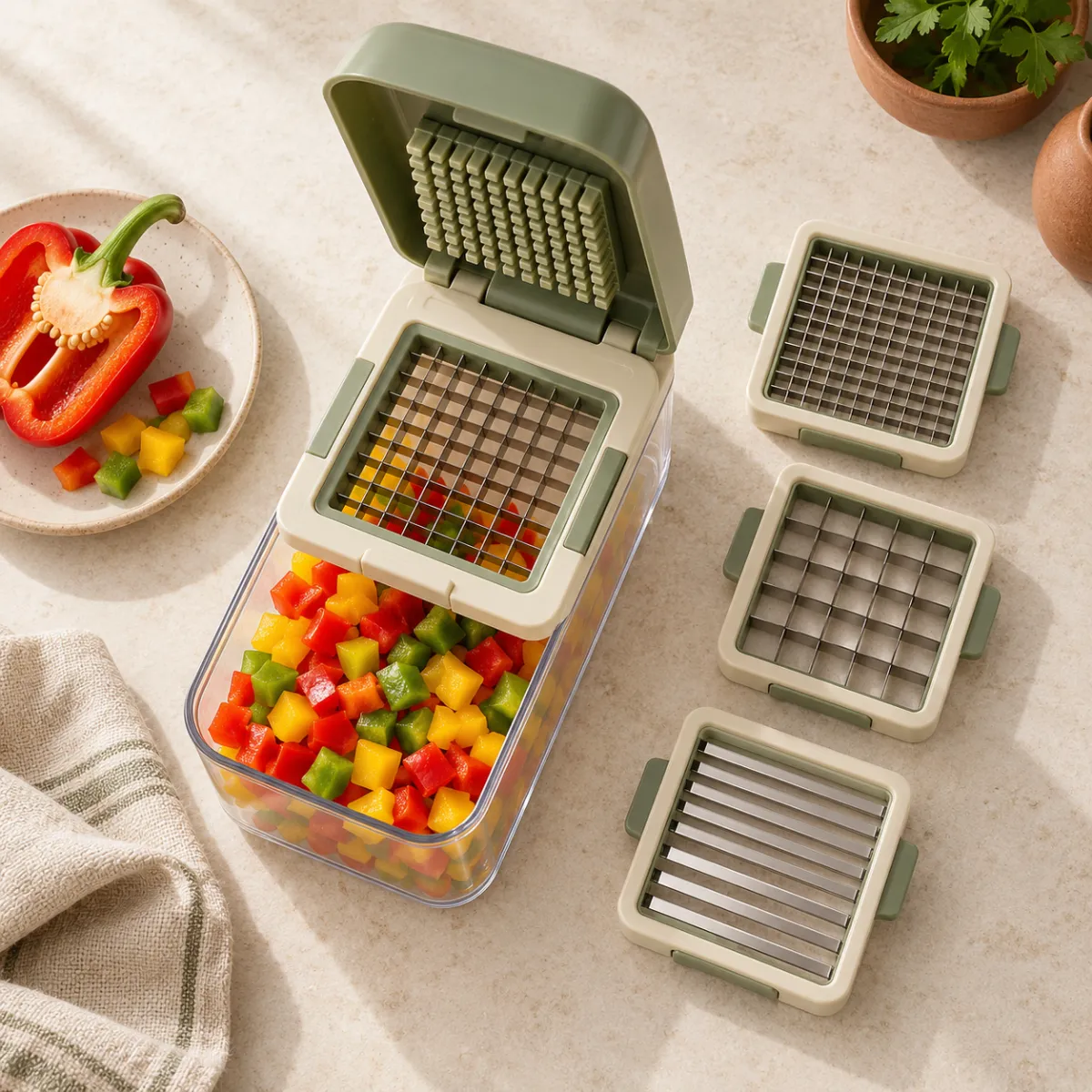
The Fullstar Vegetable Chopper is the one you've seen in a thousand videos, and the hype is mostly earned. You get several swap-in inserts for cubes, slices and spirals, plus a 5-cup catch container big enough for a full salad base. The maker lists 420 stainless steel blades, and they stay sharp a good while with normal care. Plenty of 4-in-1 knockoffs copy the design; the original fits together better.

  • Pros: wide range of cuts; large container; produce drops straight in, so there's no extra cutting board to wash.
  • Cons: loose inserts need a home; hard roots strain the lid.
Check price

It comes in several colors and bundle sizes. Check which one's in stock today.

No. 2

OXO Good Grips Chopper: Pros and Cons

OXO keeps it simple: one dicing grid, a soft lid you press with your palm, and an easy-pour opening that tips onion straight into the pan. Fewer parts, less to lose, faster washing up. The tradeoff is a single cut size and no slicing option. As a plain onion chopper, it's hard to fault.

  • Pros: comfortable to press; few parts; pours neatly.
  • Cons: one size of cube; smaller bowl than multi-insert kits.
Check price

A good fit if you want cubes and nothing else. See current stock.

No. 3

Zyliss Easy Pull Chopper: Pros and Cons

The Easy Pull works like a salad spinner with knives: pull the string and a rotating blade whips around a covered bowl. It's sold as both a food chopper and a manual food processor, and that's fair. It beats press-style designs on salsa, herbs, nuts and garlic. Among handheld choppers it's also the easiest to stash in a drawer.

  • Pros: you control the texture; nothing to jam; compact.
  • Cons: pieces vary in size; the string is the part that wears first.
Check price

Small, quiet, outlet-free. Worth a look if salsa and herb sauces are your thing.

Best Veggie Chopper for Everyday Prep

For one best veggie chopper for daily use, take the multi-insert kit: cubes, slices and spirals with a single container. For quick prep of one onion at a time, the simpler press model is faster to pull out and rinse. Either way, the best manual vegetable chopper is the one you'll actually reach for, so buy for the job you do most.

Check price

Prices on both change often. Compare them side by side before you decide.

Best Electric Vegetable Chopper Picks, Ranked

Electric models earn their counter space when you prep large batches or hard produce regularly. Both picks below are small and easy to live with.

No. 1Best electric

Cuisinart Elemental Chopper: Pros and Cons

The Cuisinart Elemental 4-Cup Chopper/Grinder is the workhorse. Separate chop and grind settings take it from rough-cut onion to fine breadcrumbs, and the bowl fits a family batch of salsa or hummus. It'll even puree baby food or a smooth dip. Cuisinart has made these small machines for decades, and spare parts are easy to find.

  • Pros: strong enough for carrots and nuts; two speeds of work; bowl, lid and blade are top-rack washable.
  • Cons: loud; pieces are less tidy than a press model's; easy to over-process.
Check price

This one goes on sale often. Worth checking today's price.

No. 2Best for tiny kitchens

Ninja Food Chopper Express Chop: Pros and Cons

Ninja's little unit is a compact electric design: you press the top to pulse, so control sits in your palm. The 16-ounce bowl suits dressings, a single onion or garlic paste, and it tucks into small kitchens without fuss.

  • Pros: tiny footprint; intuitive pulse control; quick rinse.
  • Cons: small capacity; not built for bulk prep.
Check price

Small enough for a dorm, a studio or a housewarming gift. See if it's in stock.

Spiralizer Attachment Value

Neither mini processor spirals. If zucchini noodles matter, that blade lives on manual kits like our top pick, or as a stand-mixer accessory (KitchenAid sells one). Worth paying for? Only if you'll use it. A spiralizer insert earns its spot with a weekly zoodle habit and is pure clutter if you try it once. Julienne and spiral cuts also suit carrot and cucumber slaws, which widens the case a little.

Check price

Want spirals too? A multi-insert manual kit is the cheapest way in.

Vegetable Chopper Comparison Table: Price, Capacity, and Features

Everything in one place, so you don't have to scroll back and forth.

ModelTypeCapacityBladesMaterialDishwasherPrice tierBuy
Fullstar Pro OriginalManual, press5 cupsSeveral inserts (cube, slice, spiral)Plastic body, steel bladesYes, top rackBudget–midCheck price
OXO Good GripsManual, pressSmall–mediumOne cubing framePlastic body, steel bladesYes, top rackBudgetCheck price
Zyliss Easy PullManual, pull-stringSmallSpinning blade setPlastic body, steel bladesBowl and bladesBudget–midCheck price
Cuisinart ElementalElectric, cordedFour cupsOne blade, two functionsPlastic bowl, steel bladeBowl, lid, bladeMid-rangeCheck price
Ninja Express ChopElectric, corded16 ozOne bladePlastic bowl, steel bladeBowl, lid, bladeBudgetCheck price

Price tiers are relative, not fixed. Amazon prices shift, so tap through for the live figure. Washing notes follow each maker's guidance; motor bases never go in.

Food Chopper vs Dicer vs Food Processor: Naming Guide

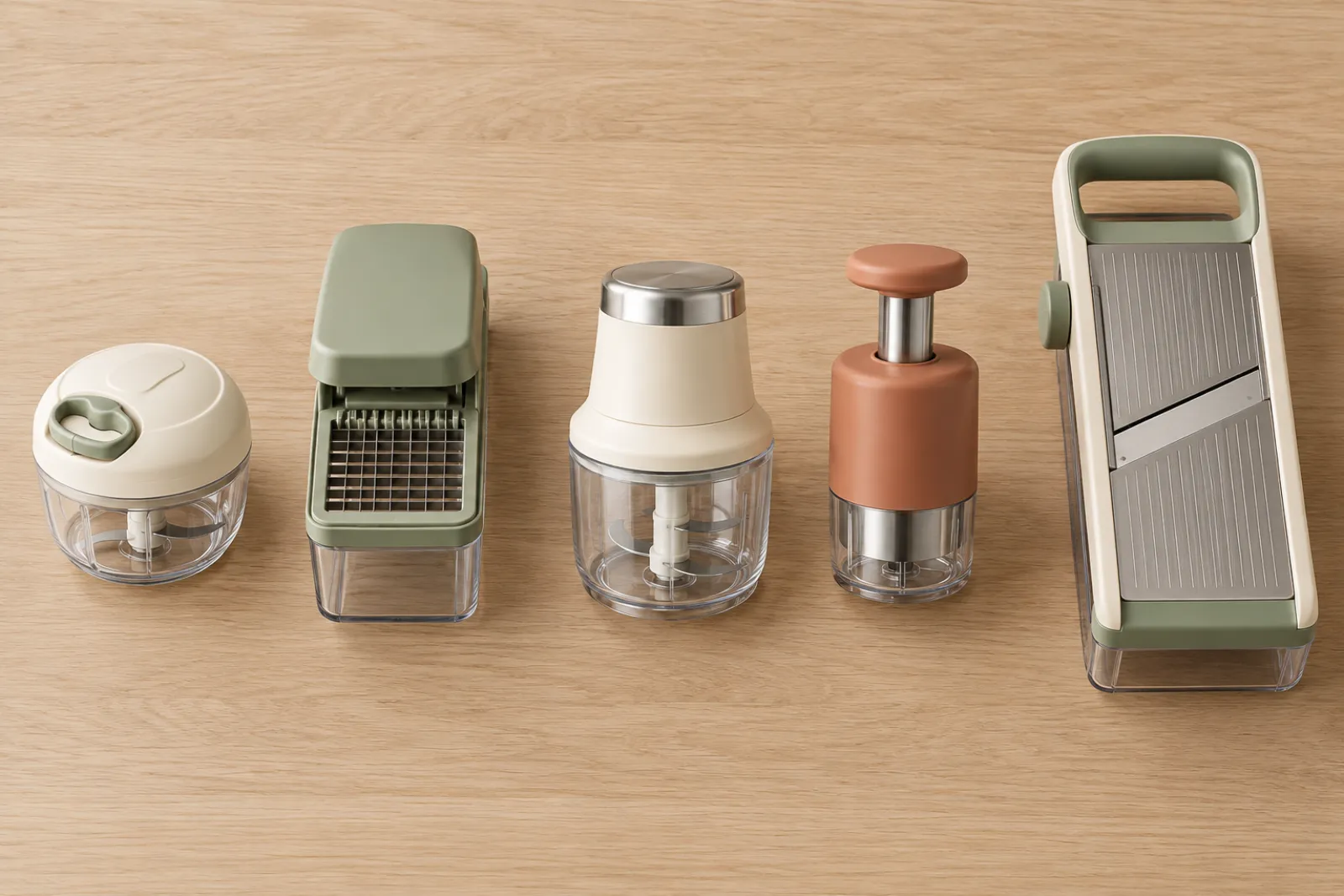
People use these words interchangeably, but they're different tools. A food chopper is a small manual or electric device that breaks produce into pieces fast. A vegetable dicer forces produce through a blade frame to make uniform cubes. A food processor is a full-size motorized machine with discs for shredding, slicing and kneading.

Chopper, Dicer, Slicer, and Mandoline Explained

  • Chopper: blades cut produce into irregular to fine pieces. Pull-string and electric designs live here.
  • Dicing tool: a grid and plunger make even cubes. Retail listings often say "chopper dicer" or "slicer chopper" for combo kits, which is where the confusion starts.
  • Slicer: produces flat rounds or planks, sometimes via an insert on a press model.
  • Mandoline: a razor-sharp flat blade you slide food across. A mandoline slicer gives paper-thin cuts but demands a guard.
  • Spiral slicer: turns zucchini or carrots into ribbons.

Multipurpose kits blur the lines: one box might hold two cube sizes, a slicing plate, a spiral blade and a french fry cutter. Handy, as long as you'll use the inserts. Most dicers get bought for onions and nothing else.

What to Look for in a Vegetable Chopper: Buying Criteria

The picks above suit most people. Shopping beyond them? These specs separate a good tool from a drawer-filler.

Vegetable Chopper as a Kitchen Tool: Build Quality and Materials

Look for stainless steel blades, ideally a named grade, and a BPA-free body that doesn't flex under your palm. A non-slip base or natural rubber feet keep the container from skating around. An ergonomic handle or wide lid matters more than you'd think by the fifth onion. Full stainless steel construction is rare and heavier, though it lasts. Size the bowl to your household: a 500ml pull-string bowl covers two cloves and a shallot, while a 3-cup or bigger container suits family salads.

Multi-Blade Systems and Interchangeable Blades

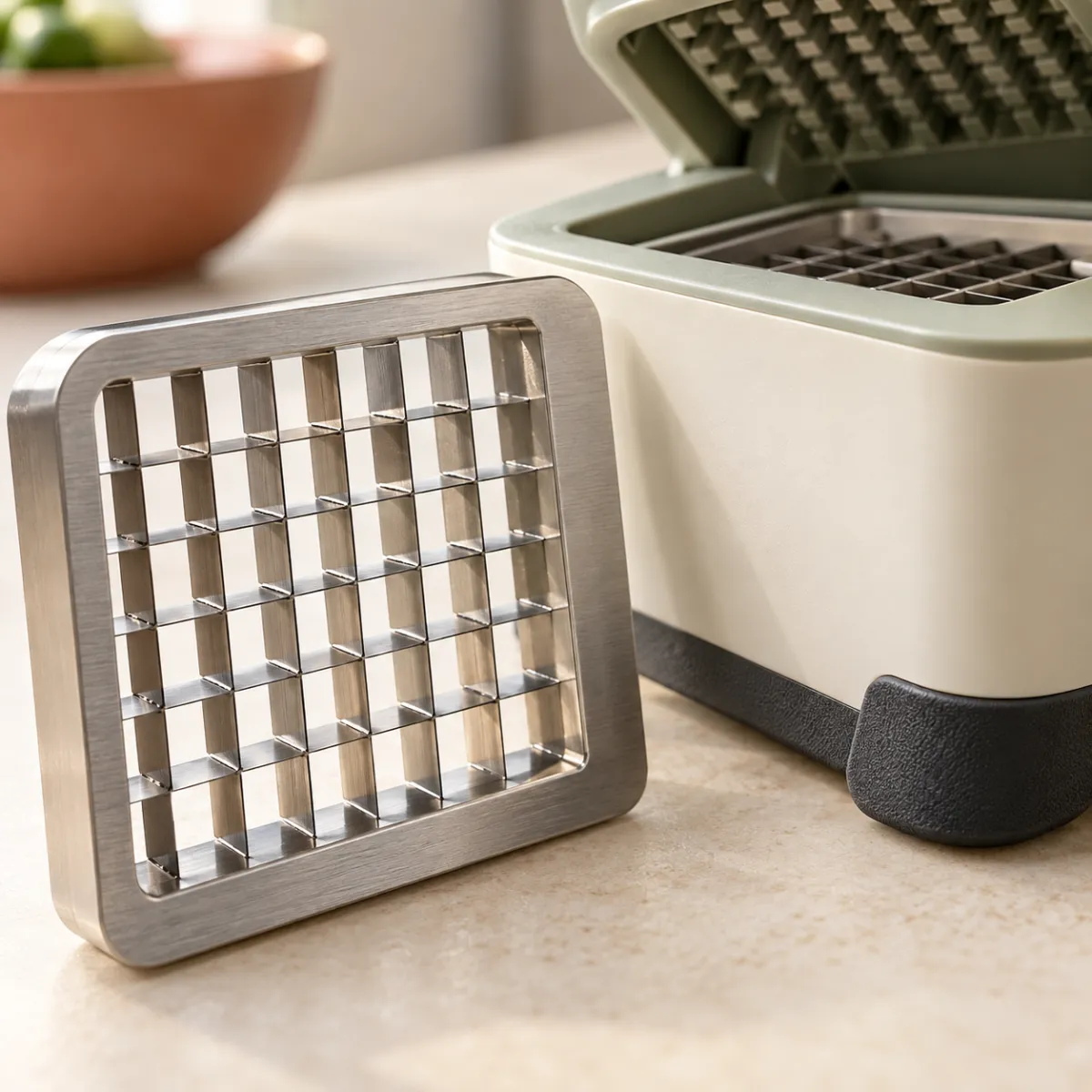
A multi-blade kit with interchangeable blades gives you range, but every extra insert needs storage. Check that the blades dice cleanly at the corners; cheap frames leave strings of onion attached. Two cube sizes cover most recipes. Extras beyond that rarely get used.

Dishwasher Safe Parts and Easy Cleanup

"Dishwasher safe" on the box usually means top rack only, and hinged lids last longer hand-washed. Prefer designs that come apart fully, with no blind corners where onion hides. If it isn't easy to clean, you'll stop using it. That's the biggest reason these tools get abandoned.

Quick checklist: sharp stainless blades, a stable base, a bowl sized for your household, inserts you'll use, parts that come apart. Found one that ticks all five? Check its price and reviews next.

Check price

How We Tested Vegetable Choppers

Every chopper we tested went through the same routine, by hand, in a regular home kitchen. We don't publish lab scores we can't show you. Outfits like Consumer Reports run instrument-based tests; our aim is criteria you can check on your own counter.

Vegetables Used in Testing

We ran vegetables like yellow onion, zucchini, ripe tomato and garlic through each model, plus raw carrot and potato as hard-produce stress tests. Bell pepper and cucumber rounded it out, and a mix of vegetables and fruits went in for a chunky salsa. That covers soft, wet, fibrous and dense, which is what a normal week throws at a tool.

Scoring Criteria: Speed, Consistency, and Cleanup

Speed
prep time versus a sharp chef's knife, setup included.
Consistency
even cuts that cook at the same rate, not chunks mixed with mush.
Washing
how long a full clean takes and whether residue hides between blades.
Build
lid flex, base grip and how the edges held up.

These are the things you'll notice after a month of everyday cooking. That's the point.

Watch: how to choose the best vegetable chopper for your needs

Check price

See how our top-rated picks compare on price today.

Vegetable Chopper Care and Maintenance: Cleaning Tips

Cared for, a good model stays sharp for years. Left with dried onion between the blades, it goes dull and smelly in weeks.

Cleaning Blades and Removing Stuck Residue

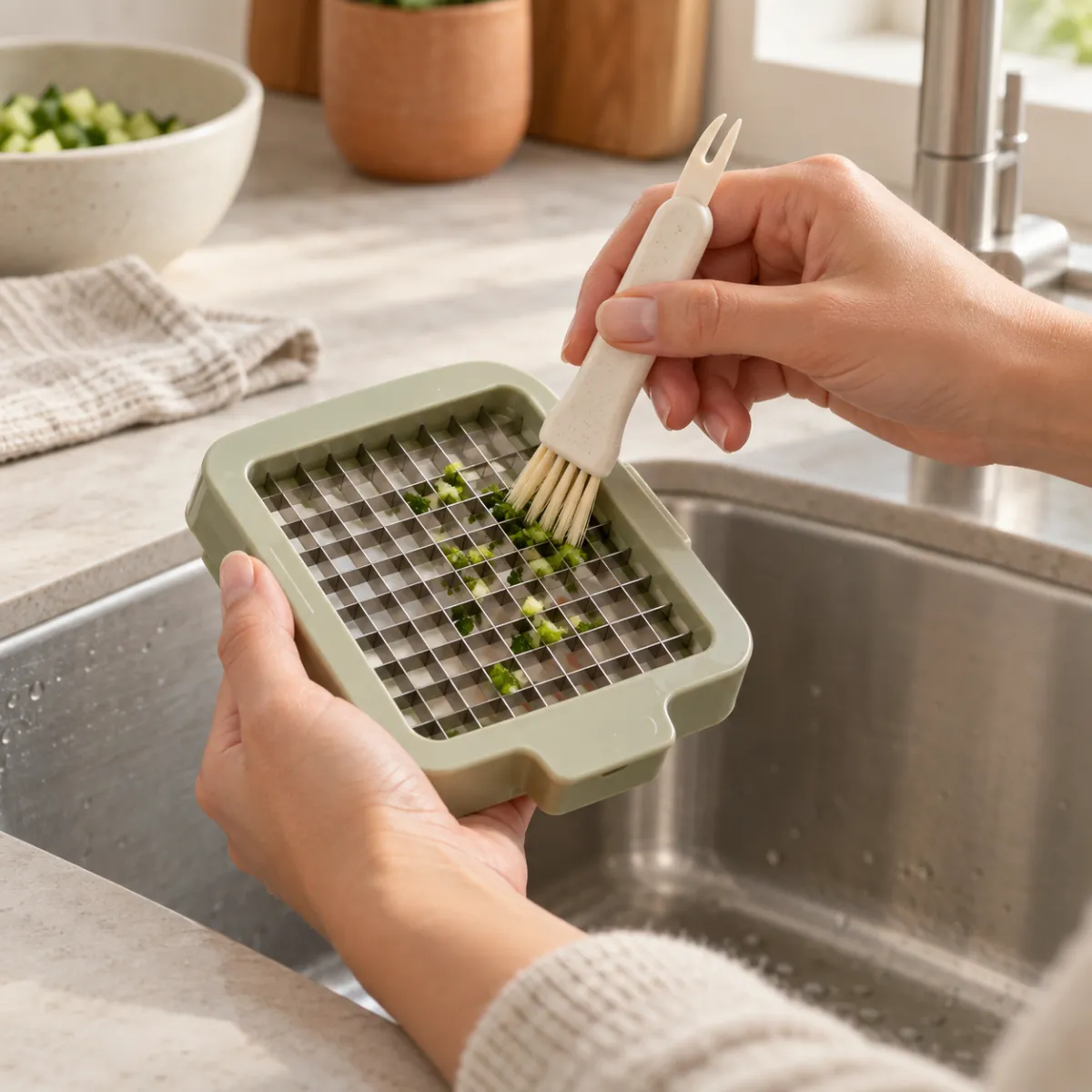
Rinse right after use, before starch and juice dry on. Push the cleaning fork (most press kits include one) up through the blades from below to pop out wedged bits, then brush along the edges, never across them. For dried residue, soak the insert in warm soapy water for ten minutes. Blade safety first: hold inserts by the frame and never wipe an edge with a cloth.

Dishwasher vs Hand-Washing

Most bowls and lids are labeled dishwasher-safe, but heat dulls edges faster and can warp thin hinges. Hand-wash blades; let the machine handle containers. Dry everything before storage so steel doesn't spot, and keep loose inserts in a case so nobody grabs a blade blindly. Easy cleanup is what keeps a tool in rotation.

Vegetable Chopper Cost: Price and Value in Year One

Rather than quote prices that change weekly, think in tiers. Budget press models and pull-string bowls sit at the low end. Multi-insert kits and small electrics run mid-range. Premium means full-size processors and steel-bodied tools.

The smarter number is cost per use. Use a tool three times a week and that's about 150 uses in year one, so even a mid-range model works out to small change per meal. A budget one that cracks in month two costs more in practice. Spare inserts help too: some brands sell them, which stretches a tool's life. For home cooks who prep often, mid-range usually wins on value.

Check price

Today's Amazon price is the only one that counts. Check it before you pick a tier.

Vegetable Chopper FAQ

What is the best vegetable chopper?

For most kitchens, our best vegetable chopper is a multi-insert manual model: cubes, slices and spirals with one container, no outlet needed. If you prep big batches or hard roots, a small electric from Cuisinart is the better bet. Match the type to the kitchen tasks you do most.

Do veggie choppers actually work?

Yes, for the right jobs. Press-style models turn out even cubes of onion, pepper and cucumber far faster than a knife, and pull-string bowls handle salsa and herbs. They struggle with raw carrots and very ripe tomatoes, so keep a knife handy for those.

Are vegetable choppers worth buying?

If you cook at home several nights a week, yes. They make chopping a non-event, onions included, and uniform pieces cook more evenly. If you cook once a week or love knife work, skip it. For everyone in between, a budget manual model is a low-risk test.

What is the best brand of vegetable chopper?

There's no single winner. The maker of our top manual pick leads on versatility, Cuisinart is the dependable name for small electrics, and Ninja does compact well. Buy the model that fits your cooking, not the logo, and check that spare parts are sold.

Should you choose a manual or electric vegetable chopper?

Go manual if you mostly cube onions, peppers and salad veg and want something quiet. Go electric for dips, sauces, pesto, bulk prep or limited hand strength. Many keen cooks own one of each, because the jobs barely overlap.

How do you clean and maintain a vegetable chopper?

Rinse straight after use, clear the blades with the included fork, and brush along the edges. Hand-wash inserts to keep them sharp; bowls can go on the top rack. Dry fully before storing, and keep loose blades in a case.

Can a vegetable chopper replace a food processor?

For everyday chopping vegetables, mincing and small batches, yes. A full-size processor still wins at shredding cheese, kneading dough and slicing big volumes. If your machine mostly sees onions and garlic, a compact unit does that job with far less washing up.

How long does a vegetable chopper last?

A well-made model lasts years with gentle care. Plastic hinges and pull strings usually fail before the blades, so favor brands that sell spare parts. Electric motors tend to outlast the bowls. Hand-washing blades and never forcing hard produce add the most life.

What's the difference between a chopper and a dicer?

A chopper cuts food into pieces of varying size, coarse to fine, with spinning or rocking blades. A dicing tool pushes food through a fixed frame for uniform cubes. Many products combine both, which is why listings mix the terms. If neat cubes matter, choose a press model.

What should you look for when buying a vegetable chopper?

Sharp stainless steel blades, a stable non-skid base, a bowl sized for your household, and parts that fully come apart. Count the inserts you'll really use and check that spares exist. Then compare live prices, since the same model can swing between tiers week to week.

Check price

Still deciding? Today's prices often settle it.

Best Vegetable Chopper: Final Verdict and Where to Buy

Our final recommendation: for most kitchens, the best vegetable chopper is the multi-insert manual model from our top pick. It's versatile, quick, and cuts real time from food preparation. Prep big batches or hard roots? Add the Cuisinart. Short on space? The Ninja is the one. Vegetable choppers do work and take the chore out of onion night, as long as you match the tool to the job. Check price and availability on Amazon, then get back to cooking.

Check price

Prices change daily on Amazon. Tap through to see today's deal and stock.